
At a workshop on August 28, 2025 in Bern, the new DISCO database – Digital Inventory of Swiss Coin Finds – was presented.
The database will be the central tool of the Inventory of Coin Finds from Switzerland for processing, evaluating and cataloging coin finds from Switzerland and Liechtenstein, and will be available both as linked open research data and in print.
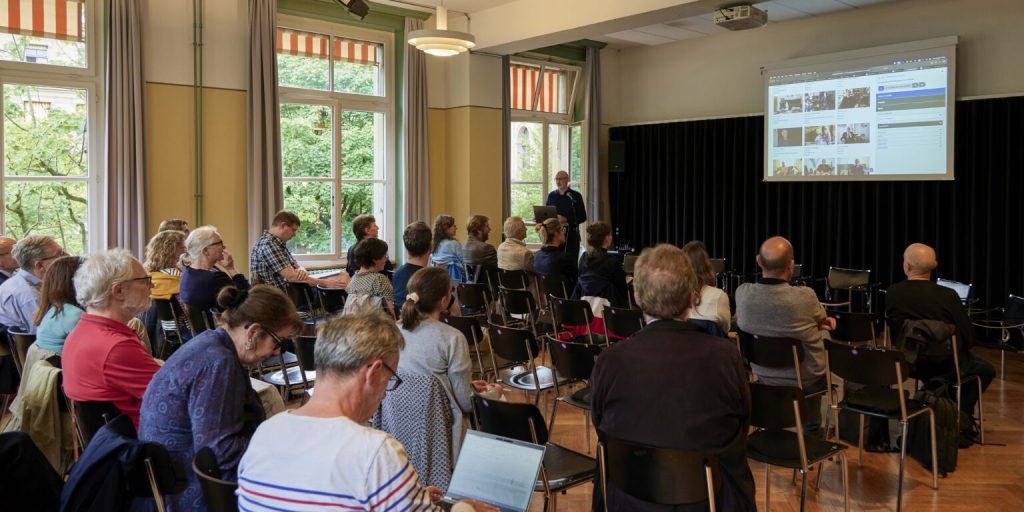
(Translated from the website of the Inventory of Coin Finds from Switzerland).
“DISCO is an instance of Dédalo, a cultural heritage management system developed by Render SA, Valencia. In close collaboration with Dédalo developers Alejandro Peña and Juan F. Onielfa, and in coordination with other numismatic projects that use Dédalo, the system was expanded to meet our specific needs when working with coin finds from Switzerland and Liechtenstein. In spring 2025, Jonas von Felten began transferring our data from the central IFSA database, which has been in use since 2005, to DISCO. We have now reached a stage where we want to share our progress with our partners in archaeological services and museums.
At the beginning of the afternoon, Dédalo developers Alejandro Peña and Juan F. Onielfa presented Dédalo with its many different fields of application in oral history projects, museums, and archaeology; we too employ some of the many modules for our work with coin finds and related projects.
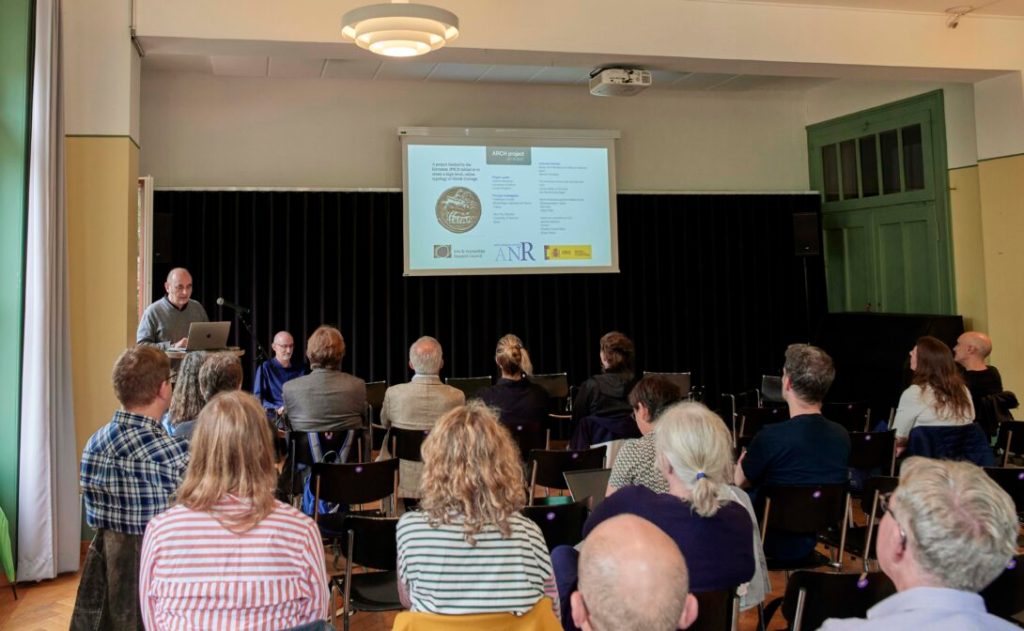
Manuel Gozalbes from the Prehistoric Museum of Valencia presented Moneda Ibérica, the “flagship” of Dédalo Numismatics, and traced its origins from a personal card index to an interactive typological portal. Elena Morena Pulido from the University of Cadiz presented WONDERCOINS, the other major coin find project in Dédalo, which has been joined by other projects from Spain, Mauritania and Sardinia.
We at IFS are actively involved in the development of OCC – Online Celtic Coinage, the type portal for Celtic numismatics. David Wigg-Wolf, Frankfurt am Main, presented this and demonstrated how closely Dédalo is linked to nomisma.org.
Finally, Jonas von Felten outlined the IFS’s path to DISCO and explained the potential of the system for our work on coin finds, including detailed user and access management. Rahel C. Ackermann briefly presented the workings of the backend and offered a glimpse of the future public portal with its possibilities.
All our speakers and the IFS team were available to answer questions from our partners during the breaks and at the reception afterwards. And nomen est omen – we ended the evening with a DISCO party.
Already in the morning, some colleagues from the archaeological services, coin cabinets, and two universities took the opportunity to take a look behind the user interfaces together with the Dédalo developers Alejandro Peña and Juan F. Onielfa.
What are the next steps?
We will begin active work in DISCO before the end of this year in order to record the new discoveries from 2024/2025 for the next two bulletins, IFS ITMS IRMS. At the same time, we will publish the first data on the public portal. We will then replace NINNO, our Filemaker application, which is used by some of our partners and for various projects, and integrate the data recorded into DISCO. Our partners will also be able to work actively in DISCO. Overall, we will merge digital data from over 45 years of collective work on coin finds from over 12,000 sites with over 140,000 coins, as well as several tens of thousands of photos of objects, into DISCO. IThis iwll involve a great deal of checking and cleaning. In addition, we want to supplement the existing data so that it can be evaluated using the full potential of DISCO”.
Programme for the afternoon of August 28, 2025, click here.
For Dédalo (including documentation), click here.
 European Coin Find Network (ECFN)